
Scalable quantum computers through a modular approach
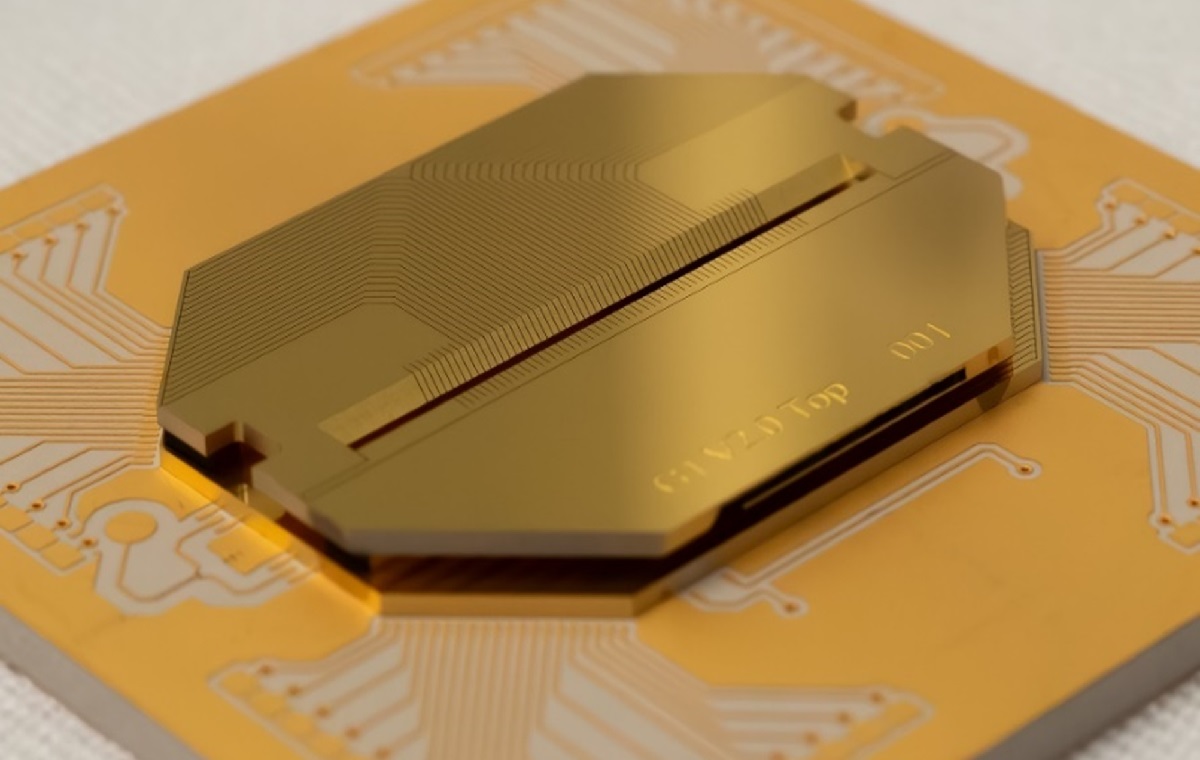
The SQale project, led by neQxt GmbH, aims to address the many challenges in scaling up quantum computers. The innovative modular approach will integrate more than 200 interconnected qubits designed to achieve globally competitive low error rates. On February 11, 2026, representatives of all partners and subcontractors came together to kick off the project, which is funded by the BMFTR with a total of €18.4 million.
Press Release
Ion trap quantum computers with more than 200 qubits: kick-off of the BMFTR-funded SQale project
February 11, 2026, marked the kick-off of the SQale project, which will significantly advance the field of quantum computing with its innovative approach to developing next-generation ion trap quantum computers. With over 200 interconnected qubits, the project aims to achieve unprecedentedly low error rates for the implementation of NISQ algorithms and the testing of advanced error correction techniques. The joint project between neQxt GmbH and FZ Jülich is funded by the BMFTR with a total of €18.4 million.
Quantum computers have enormous potential to overcome the limitations of classical computing. They can provide users with a revolutionary tool for a wide range of tasks, such as chemical simulations, materials research, and optimization tasks. However, all quantum computing systems have so far struggled with scaling.
The SQale project, led by neQxt GmbH, aims to do something about this situation and represents a significant undertaking in the development of the next generation of ion trap quantum computers. The innovative modular approach will integrate more than 200 interconnected qubits designed to achieve globally competitive low error rates. An important goal is to facilitate the implementation and validation of NISQ (Noisy Intermediate-Scale Quantum) algorithms, paving the way for more demanding applications in various industries.
On February 11, 2026, representatives of all partners and subcontractors involved in the project came together for a joint kick-off meeting at the neQxt premises in Weiterstadt, in the Frankfurt Metropolitan Region. The German Federal Ministry of Research, Technology and Space (BMFTR) is funding the project as part of the »Enabling Start-up – Start-ups in Quantum Technologies and Photonics« initiative for a period of four years with a total of €18.4 million.
SQale's mission
SQale stands for an ambitious mission in which neQxt GmbH is striving to develop next-generation ion trap quantum computers. These quantum computers, with several hundred connected qubits, are expected to reach some of the lowest error rates worldwide. To achieve these goals, a series of groundbreaking innovations in qubit operations and architecture are necessary, which are to be implemented in this project.
The far-reaching developments and advances in SQale will form the basis for moving toward modular, scalable systems with several thousand qubits. SQale is thus laying a crucial foundation for the establishment of a future quantum computing centre in Germany, which will allow customers to use internationally competitive quantum computers via the cloud access, thereby strengthening Germany's technological and digital sovereignty.
Contributions from the consortium partners and subcontractors
NeQxt coordinates the entire project, designing, building, integrating, and testing not only the ion traps underlying the technology itself, but also the other hardware of the quantum computer. Contributions from partners and subcontractors are tested immediately and can thus be dynamically adapted and improved. The necessary electronic components are also designed and built by neQxt itself. As a full-stack quantum computing company, neQxt is also responsible for all control and operating software for the quantum computer.
The Forschungszentrum Jülich (FZJ) will play an important role in the project and beyond by focusing on the development of robust error correction algorithms, which are essential for the successful implementation and reliable operation of quantum computing systems.
To enable true scalability, the use of integrated waveguide systems with active waveguide modulators is planned. These are being developed specifically for SQale as part of subcontracts by the Fraunhofer Institute for Microelectronic Circuits and Systems (IMS) and the Fraunhofer Institute for Silicon Technology (ISIT) and will be tested immediately on neQxt's ion trap systems.
Other subcontractors, such as CAVITY technologies and the Ferdinand Braun Institute (FBH), will play a crucial role in increasing system performance through improved laser technologies and advanced optical resonator designs.
Other subcontractors, such as CAVITY technologies and the Ferdinand Braun Institute (FBH), will play a decisive role in increasing system performance through advanced optical resonator designs and the development of a novel laser module.
What the people in charge have to say
»SQale is not only intended to mark a significant leap forward in hardware development, but also to lay the foundation for scaling and commercializing the technology,« says Dr. Björn Lekitsch, Chief Technology Officer at neQxt and project manager for SQale.
»Our commitment to basic research in this area ensures that the results of SQale go far beyond pure hardware development and pave the way for future technological advances that are particularly necessary for scalable error-corrected quantum computing,« says Prof. Dr. Markus Müller, head of the research group for theoretical quantum technologies at the Peter Grünberg Institute 2, which he heads at FZJ, and at the Institute for Quantum Information at RWTH Aachen University.
Prof. Dr. Anna Lena Schall-Giesecke, Head of Technology at Fraunhofer IMS, adds: »Integrated photonic circuits form the backbone of future quantum technologies. As a key technology for ion trap quantum computers, they enable precise light control in the smallest of spaces — and thus represent a decisive step toward scalable, industrially usable quantum processors. We are developing the tailor-made technology for this purpose.«
»At Fraunhofer ISIT, we are working on many fronts in the SQale project,« adds Prof. Dr. Shanshan Gu-Stoppel, Head of the Optical Systems Research Group at Fraunhofer ISIT. »These range from high-speed switches for photonic circuits to the use of MEMS mirrors in optical cavities for stabilization and increased readout efficiency, to innovative wafer technology for heterogeneous optical integration.«
»We are delighted to be part of this extremely promising project with a unique pocket-sized diode laser module that delivers ultra-short pulses,« explains Dr. Katrin Paschke, Head of the Laser Modules Lab at the Ferdinand Braun Institute.
»Scalable quantum computing places extreme demands on the underlying laser technology. With our low-noise laser systems, we are supporting neQxt in the SQale project on the path to next-generation quantum computers,« says Dr. Liam Shelling Neto, Managing Director of CAVITY technologies UG.
Commercialization and sovereignty
NeQxt covers the entire product development chain— from hardware development to software development to algorithms. By focusing on the development of scalable quantum computers with exceptionally low error rates, SQale aims not only to bring the practical application of quantum computing a step closer, but also to lay the groundwork for future innovations and developments and build a bridge to effective commercial use.
The future market launch of the high-performance quantum computers to be developed as part of SQale will not only transform industries such as chemistry and cryptography but also open up new avenues for academic research and enable new applications that are not possible with today's systems. The strong focus of neQxt and its partners on technological sovereignty can and should make an important contribution to ensuring that Germany and the EU do not once again find themselves in a position of critical dependence on non-European players in an important field of technology.
Further information
About the project partners:
About neQxt
NeQxt GmbH is a full-stack quantum computing company covering the entire spectrum from hardware manufacturing to software development. neQxt is a spin-off of Johannes Gutenberg University Mainz that emerged from the Schmidt-Kaler research group. This allows the company to draw on decades of experience in the field of ion trap quantum computers. neQxt's product portfolio includes quantum computing simulators, portable quantum computer systems, cloud access to quantum computers, and enabling technologies. www.neqxt.org
About FZ Jülich
Forschungszentrum Jülich GmbH is one of Europe's largest interdisciplinary research institutions and a member of the Helmholtz Association. The Peter Grünberg Institute PGI-2, headed by Prof. Dr. Markus Müller, is engaged in theoretical research and development of concepts for scalable quantum information processing. The research group for theoretical quantum technologies focuses on researching and implementing methods of quantum error correction and fault-tolerant quantum computing. This is often done in close collaboration with leading experimental teams working on various quantum hardware platforms, in particular with trapped ions, neutron atoms, and solid-state-based approaches such as superconducting qubits. www.fz-juelich.de/de/pgi/pgi-2
About the subcontractors:
About Fraunhofer IMS
The Fraunhofer Institute for Microelectronic Circuits and Systems (IMS) is shaping a safe and sustainable future with intelligent sensor systems. In state-of-the-art laboratories, more than 220 scientific staff and students conduct research into innovative microelectronic solutions. As a reliable research and development partner, the institute develops customized sensor technology and electronics for applications in healthcare, industry, mobility, aerospace, and security and defence technologies. Fraunhofer IMS solutions impress with their high level of integration, energy efficiency, and reliability, even under demanding conditions. They enable the transfer of semiconductor technologies and processes from the laboratory to pilot projects and on to industrial production (lab-to-fab). www.ims.fraunhofer.de
About Fraunhofer ISIT
The Fraunhofer Institute for Silicon Technology (ISIT) is one of Europe's most advanced research facilities for microelectronics and microsystems technology. At the heart of the institute are its cleanroom facilities, which offer excellent research conditions and enable the industrial-scale production of developed microchips. Around 180 scientists at ISIT work closely with industry partners to develop power electronics and microsystem components, including for photonic systems and quantum computers. www.isit.fraunhofer.de
About FBH
The Ferdinand-Braun-Institut, Leibniz-Institut für Höchstfrequenztechnik (FBH) is an application-oriented research institution in the fields of high-frequency electronics, photonics, and quantum physics. The institute conducts research on electronic and optical components, modules, and systems based on compound semiconductors. In close cooperation with industry, its research results lead to innovative products. www.fbh-berlin.de
About CAVITY technologies
CAVITY technologies UG develops and optimises ultra-stable laser systems and optical resonators for demanding applications in research and industry. The company supports customers throughout the entire development chain, from consulting to realised hardware, and makes optical resonators more efficient, robust and accessible for a wider range of applications www.cavity-technologies.com
The SQale project is funded by the German Federal Ministry of Research, Technology and Space.